ADVERTISING DISCLOSURE: THIS POST CONTAINS AFFILIATE LINKS. READ FULL DISCLAIMER
The Verdict: Harvey AI is built for Am Law 100 firms and Fortune 500 legal departments, not the rest of the market. At an estimated $1,200 to $2,000 per seat per month with 20-seat minimums, the entry point is roughly $288,000 per year. If your firm bills at BigLaw rates and runs complex M&A, due diligence, or multi-jurisdictional work, Harvey can pay for itself. For everyone else, the price is the answer.
Last updated May 7, 2026.
In This Review
What Harvey AI Is
Harvey AI is an enterprise legal AI platform built for large law firms and corporate legal departments. Founded in 2022, the company has raised funding at an $11 billion valuation as of March 2026, and more than 1,300 organizations and 100,000+ lawyers use it, including Allen & Overy (now A&O Shearman), Paul Weiss, and PwC.
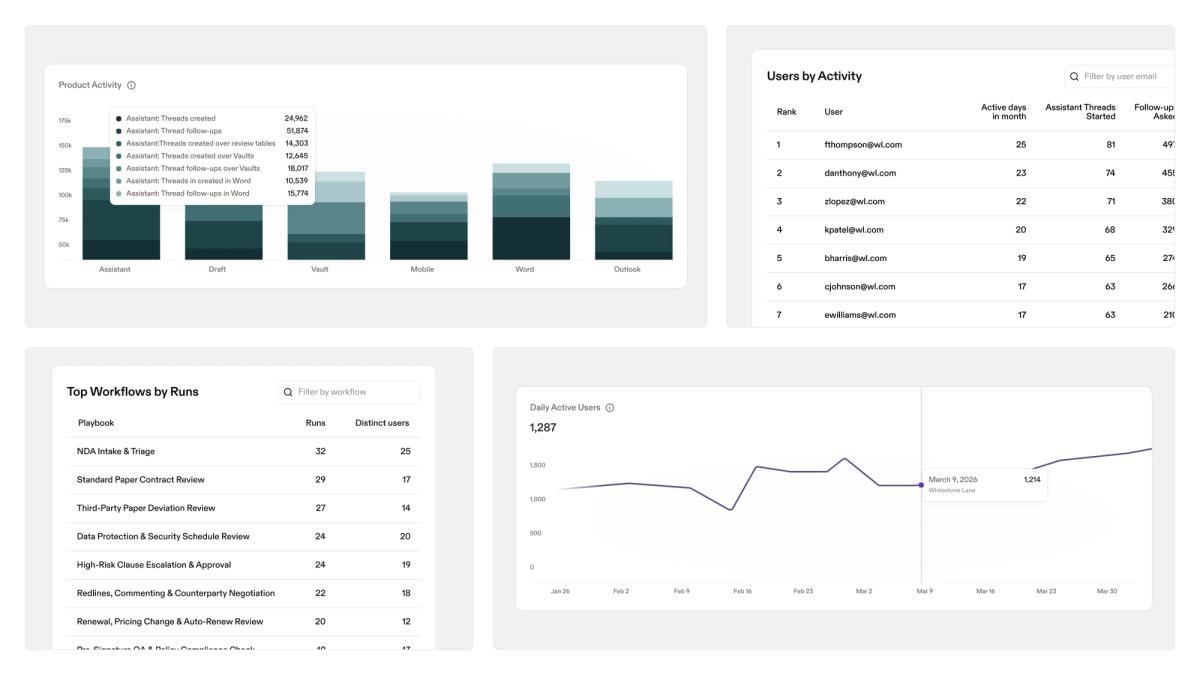
The product covers four areas: document drafting and analysis, document storage and bulk review (Vault), legal and regulatory research, and Workflow agents that automate multi-step processes. It runs on Microsoft Azure and is sold exclusively through enterprise sales contracts.
Source: harvey.ai
Harvey AI Pricing
Harvey does not publish pricing. Based on market intelligence, firm disclosures, and competitor positioning, real-world pricing in 2026 falls in this range:
| Firm Size | Estimated Per-Seat Price | Annual Minimum |
|---|---|---|
| Mid-market firms (50 to 200 attorneys) | $1,200 to $1,500 per seat per month | ~$288,000 (20 seats) |
| Am Law 100 firms (200+ attorneys) | $1,500 to $2,000+ per seat per month with volume discounts | Custom contract |
| Corporate legal departments | Custom pricing, often bundled with implementation | Custom contract |
For context, a 50-attorney firm running Harvey across the practice would spend roughly $720,000 to $1.2 million per year. A 200-attorney firm would spend $2.88 million to $4.8 million before volume discounts.
What Is Not Included
Implementation, training, and embedded legal engineering support are typically separate line items. Expect implementation timelines measured in months for a full firmwide rollout. There is no free tier, no free trial, and no self-service signup.
Key Features
Harvey’s product is organized around four core capabilities, with Workflow agents pulling them together into automated multi-step processes.
Assistant
The core conversational interface for asking questions, analyzing documents, and drafting text using domain-specific AI. It handles the foundational use cases: drafting memos and briefs, summarizing documents, comparing clauses, and answering legal questions in natural language. Where Assistant differentiates is depth of customization. Firms can train Harvey on their own templates and precedent so outputs match firm standards.
Vault
Harvey’s document storage and bulk-analysis layer. Vault lets firms securely store large document collections and run prompts against them at scale. Running a single prompt across thousands of contracts in hours instead of weeks is the feature BigLaw firms cite most often. This is what makes Harvey usable for due diligence and M&A workflows.
Research
Multi-domain legal, regulatory, and tax research. Outputs include citations, though users still need to validate them. Recent reporting suggests Harvey is deepening content partnerships with LexisNexis, which will broaden coverage but is also expected to push all-in costs higher.
Workflows
Pre-built or custom multi-step automations. A Workflow might chain together contract intake, risk extraction, redline suggestions, and a structured summary report in one run. The March 2026 funding round explicitly mentioned scaling Harvey Agents and growing the embedded legal engineering teams that build custom workflows for individual firms.
Where Harvey AI Stands Out
Enterprise-Grade Security
Harvey runs on Microsoft Azure with ISO 27001 compliance, encryption, and access controls suitable for the most security-conscious BigLaw and corporate legal environments. For firms with strict client-confidentiality and data-residency requirements, Harvey clears the bar.
Customer Roster as Validation
Harvey’s client list reads like the Am Law top 50: A&O Shearman, Paul Weiss, PwC, and dozens of other firms most lawyers would recognize. The same lawyers selling and supporting the product came from White & Case, Latham, Skadden, and Paul Weiss, which makes the product fit cleaner with how BigLaw actually works. That validation is part of what you are paying for.
Custom Models and Embedded Support
Harvey’s embedded legal engineering teams work directly with customers to build firm-specific workflows. For firms that want a partner rather than a tool, that model is genuinely differentiated from off-the-shelf alternatives. Harvey also supports analysis across multiple countries and languages, which matters for global firms doing cross-border deals.
Where Harvey AI Falls Short
Pricing Opacity Is a Real Problem
The complete absence of public pricing creates a comparison-shopping problem. You cannot rationally evaluate Harvey against alternatives without going through the full sales process. The 40% to 60% negotiation gap reported by buyers also signals that initial quotes are not anchored to defensible value, they are anchored to what the firm can pay.
Integration Gaps With Practice Management
Harvey does not integrate deeply with billing systems, NetDocuments, iManage, or most legal practice management platforms. Firms running Harvey alongside Clio, MyCase, or similar tools end up with parallel workflows. For BigLaw with custom-built tech stacks, that may be acceptable. For firms that wanted Harvey to plug into their existing systems, it is a friction point.
Accuracy Still Requires Human Review
Harvey is not exempt from the hallucination risk that affects every legal AI tool. Allen & Overy’s own guidance during their pilot was clear: “You must validate everything coming out of the system.” Outputs are a starting point, not a finished product, and firms tracking ROI on Harvey have struggled to measure productivity gains because verification time partially offsets the drafting speedup.
Inaccessible to Most of the Market
The 20-seat minimum and roughly $288,000 annual entry point excludes solo practitioners, small firms, and most mid-market firms by design. That is a strategic choice, not a flaw. But it means the legal AI conversation around Harvey is dominated by firms whose economics look nothing like the average law practice.
What Real Users Say
Independent user review data on Harvey is thin compared to mass-market legal tools. The patterns that do emerge come from firm press releases, analyst coverage, and trade publications.
Common praise: Speed on document review and due diligence is the most cited benefit, with firms reporting work that previously took weeks completed in hours. Customers also praise the embedded support model and the ability to build custom workflows for specific practice areas.
Common complaints: Pricing opacity and aggressive sales tactics are the most consistent gripes. Multiple firms report that quotes are wildly negotiable and that comparison shopping is structurally discouraged. Integration with non-Harvey systems is also a recurring frustration.
Paul Weiss, an early customer, noted in public statements that they were not using hard productivity metrics to assess Harvey because the verification time required to safely use AI outputs makes efficiency gains difficult to measure. That is an honest observation from a sophisticated buyer, and it applies to the whole legal AI category, not just Harvey.
Who Should Use Harvey AI
- Am Law 100 firms with M&A, due diligence, or large-scale document review practices where billable rates justify enterprise pricing.
- Magic circle and global firms that need multi-jurisdictional analysis and have the budget for embedded legal engineering support.
- Fortune 500 in-house legal departments with high contract volume and existing budget for enterprise legal tech.
- Firms billing $500+ per hour on transactional work where saving 10 hours of associate time on a single matter pays for the seat.
- Firms that want a managed-service relationship, not just a SaaS subscription, and value embedded support more than self-service flexibility.
Who Should Not Use Harvey AI
- Solo practitioners and small firms under 20 attorneys. The minimum seat requirement alone makes Harvey structurally inaccessible, and the per-seat cost would not be justified anyway.
- Mid-market firms billing under $300 per hour. The economics do not work when associate rates are below the threshold where AI-saved hours pay back the subscription cost.
- Firms primarily doing litigation in a single jurisdiction. Tools like CoCounsel or Clio’s Vincent AI deliver most of the practical value at a fraction of the price.
- Firms that need deep integration with practice management software. Harvey is designed to be the center of its own ecosystem, not a plug-in to yours.
- Anyone who wants to evaluate the product without a multi-week enterprise sales cycle. Harvey does not offer trials, and self-service evaluation is not on the roadmap.
Harvey AI vs. Alternatives
| Platform | Best For | Starting Price | Key Difference |
|---|---|---|---|
| Harvey AI | Am Law 100 and Fortune 500 legal teams | ~$1,200 per seat per month, 20-seat minimum | Custom workflows and embedded support |
| Casetext CoCounsel | Firms already using Westlaw | $150 to $400+ per user per month | Deep Westlaw integration, lower cost |
| Clio (with Vincent AI) | Solo and small firms | Clio Duo adds $49 to $59 per user per month | Built into practice management |
| Spellbook | Contract-heavy practices | Around $200 per user per month | Word plugin, contract focus |
Quick Pick Guide
- If you are Am Law 100 with M&A or due diligence volume, Harvey is the category leader and the price probably pencils out. Negotiate hard.
- If you bill at BigLaw rates but are not Am Law 100, get quotes from Harvey and CoCounsel simultaneously. The Westlaw integration may matter more than Harvey’s customization.
- If you are a small or mid-size firm, skip Harvey entirely. Clio’s Vincent AI or CoCounsel will deliver more practical value at a fraction of the price.
- If contracts dominate your practice, Spellbook or a dedicated CLM is usually a better fit than Harvey’s general-purpose platform.
- If you cannot get a real Harvey quote in two weeks, that is also useful information about how the relationship will go.
Popular Integrations
Microsoft 365: Harvey integrates natively with Word, Outlook, and Teams through Microsoft Azure. This is the deepest integration in the product.
Document repositories: Vault provides Harvey’s own document storage. Integrations with iManage and NetDocuments exist but are reportedly less seamless than the Microsoft stack.
Legal research platforms: Content partnerships with LexisNexis and other research providers are expanding through 2026, with Harvey customers gaining access to bundled licensed content.
Practice management and billing: This is Harvey’s weakest integration area. Firms using Clio, MyCase, or similar tools should expect parallel workflows rather than unified ones.
Frequently Asked Questions
Does Harvey AI offer a free trial?
No. Harvey does not offer a free trial, free tier, or self-service signup. Every evaluation goes through enterprise sales, which typically involves a multi-week process with demos, technical scoping, and contract negotiation.
How much does Harvey AI cost for a 50-person firm?
Based on market estimates of $1,200 to $1,500 per seat per month for mid-market firms, a 50-attorney firm running Harvey across the practice would pay roughly $720,000 to $900,000 per year. Volume discounts and negotiation can reduce this meaningfully.
Is Harvey AI worth it, or should I use Casetext CoCounsel?
For most firms, CoCounsel delivers most of Harvey’s practical value at 10% to 20% of the cost, especially if you already have Westlaw. Harvey wins on custom workflows, embedded support, and deep customization for firms that need those things and have the budget. For everyone else, CoCounsel is the better starting point.
Can Harvey AI handle work for solo practitioners or small firms?
No. Harvey’s 20-seat minimum and enterprise pricing structure make it inaccessible to solo and small firms. Solo practitioners should look at Clio Duo, CoCounsel, or general-purpose tools like Claude or ChatGPT with appropriate confidentiality safeguards.
How long does Harvey AI take to implement?
Full firmwide implementation typically takes several months and includes onboarding, custom workflow development, and integration with existing systems. Smaller pilot deployments can launch faster, but the embedded legal engineering relationship is part of what you are paying for.
Is Harvey AI’s research good enough to replace Westlaw or Lexis?
Not currently. Most Harvey customers continue to subscribe to Westlaw or Lexis for primary research and use Harvey for synthesis, drafting, and analysis on top of that research.
Does Harvey AI integrate with practice management or business tools?
Harvey integrates primarily with Microsoft 365 (Word, Outlook, Teams). Integration with practice management platforms, billing systems, and general business tools is limited compared to mass-market legal tech.
Is Harvey AI SOC 2 compliant?
Harvey runs on Microsoft Azure with ISO 27001 compliance. Confirm specific certifications including SOC 2 status during the sales process.
What is Harvey AI’s cancellation policy?
Harvey contracts are typically annual with 12-month commitments. Specific cancellation terms vary by contract and should be reviewed carefully during negotiation. Auto-renewal provisions are common in enterprise SaaS, so flag renewal terms before signing.
Can Harvey AI replace a contract lifecycle management (CLM) platform?
Not really. Harvey can analyze, draft, and review contracts, but it does not manage approval routing, e-signature workflows, or full contract lifecycle tracking the way a dedicated CLM does. Firms with high contract volume often run Harvey alongside a CLM rather than replacing one.
Is Harvey AI right for in-house legal teams at mid-size companies?
Probably not. Harvey is built for Fortune 500 in-house teams and Am Law firms. Mid-size company legal departments are usually better served by tools like CoCounsel, Spellbook, or contract-focused platforms that are priced and built for their scale.
Final Verdict
Harvey AI is the most expensive legal AI on the market, and for a specific slice of the market, it is also the best. If you are Am Law 100 with M&A or due diligence work where saving associate hours pays back the seat cost in a single matter, Harvey is doing what no one else does at that level of customization and embedded support.
For everyone else, the price is the answer. The 20-seat minimum, lack of public pricing, limited integrations with practice management software, and comparable performance of cheaper alternatives like CoCounsel mean that most firms get more practical value from a $150 per user per month tool than from a $1,500 per seat one. If your firm is not in the BigLaw market, the right call is to skip Harvey entirely and pick a tool built for the way your practice actually works.
Last updated on May 7, 2026