ADVERTISING DISCLOSURE: THIS POST CONTAINS AFFILIATE LINKS. READ FULL DISCLAIMER
Last updated: May 2026
Quick verdict: Deel is the broadest global hiring platform on the market, with EOR, contractor management, and payroll across 150+ countries on a single interface. Pricing is published openly (rare in this category) and starts at $49 per contractor and $599 per EOR employee per month. The trade-offs are real: contractor withdrawal fees frustrate workers, currency conversion markups stack quietly on invoices, and an ongoing lawsuit with Rippling alleging corporate espionage has drawn a US Department of Justice criminal investigation. For most companies hiring 5+ people internationally, Deel still tends to win on total cost and breadth. For buyers who want full pricing transparency or a cleaner reputation footprint, Remote and Multiplier are credible alternatives.
What Deel Is
Deel is a global hiring platform that lets companies pay contractors, employ workers through Employer of Record (EOR), and run payroll across 150+ countries from one dashboard. Founded in 2019 by Alex Bouaziz and Shuo Wang, it has scaled rapidly: 37,000+ customers, 1.5M+ workers paid through the platform, and roughly $22 billion in payroll processed annually. Deel owns 250 legal entities and operates payroll engines natively in 55+ countries, which is unusual in a category where most providers rent infrastructure from local partners.
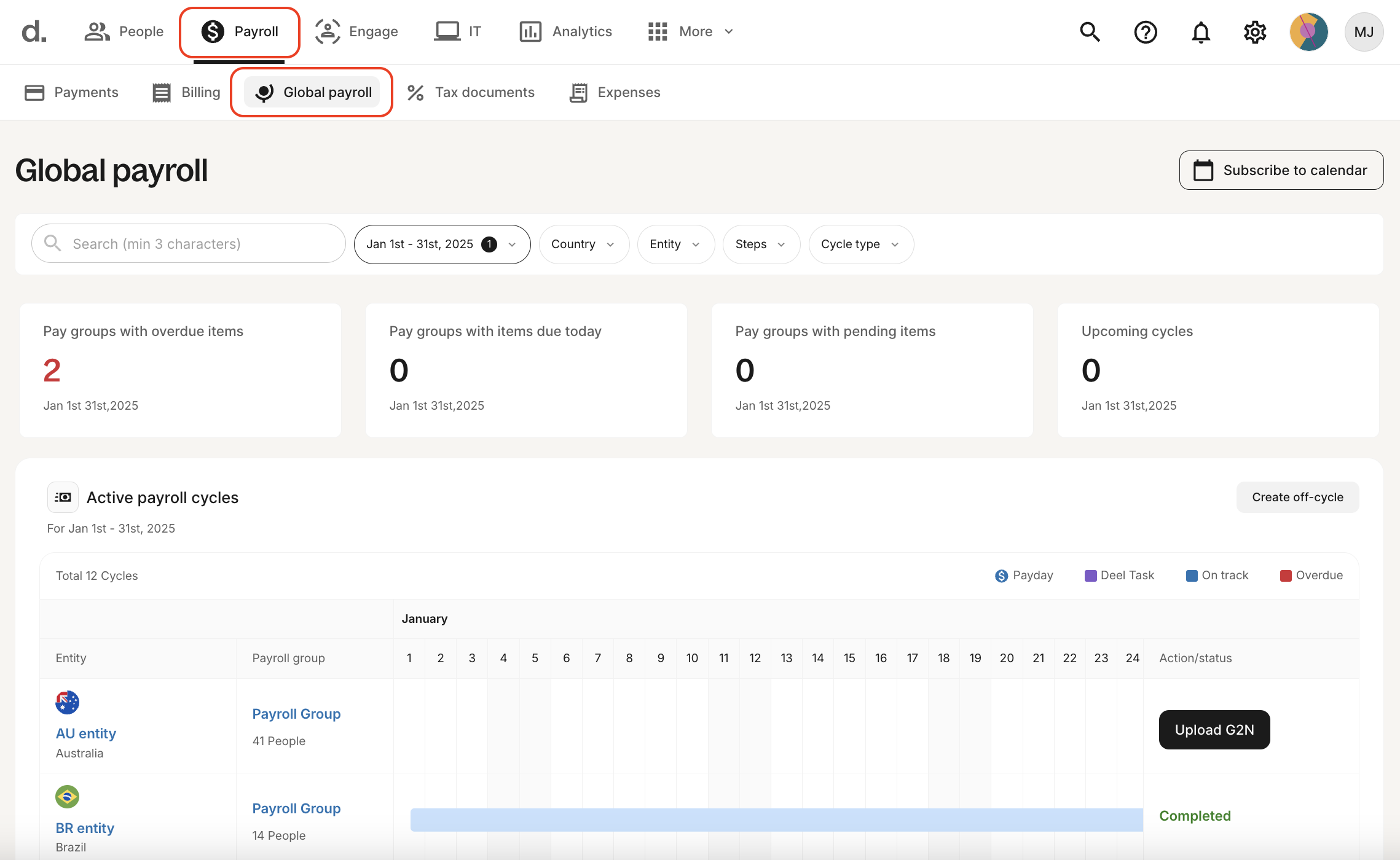
The platform covers four core workflows. EOR lets you hire full-time employees in countries where you have no legal entity, with Deel acting as the legal employer. Contractor Management handles compliant agreements, multi-currency payouts, and tax forms in 150+ jurisdictions. Global Payroll consolidates multi-country payroll for companies that already have their own entities. US PEO covers co-employment for US-based teams. Around those, Deel layers Deel HR (free HRIS for up to 200 employees), Deel IT (device management), Deel Engage (performance), and Deel Mobility (visa and immigration support).
The typical buyer is a remote-first startup or scaling company with team members in 3+ countries who needs to skip the $20,000 to $100,000+ cost of setting up local entities everywhere they hire. Deel is also commonly used by accountants and HR teams consolidating fragmented contractor payments and country-specific compliance into one system. It is less appropriate for US-only companies hiring exclusively domestic employees, where simpler tools like Gusto or Justworks are typically a better fit.
Pricing
Deel publishes more pricing publicly than most competitors in this category, but the structure is layered enough that headline numbers rarely match what a real company will pay. As of May 2026, Deel offers nine plans across HR, payroll, contractors, and employment, with several add-ons quoted on request.
| Plan | Price | Best for |
|---|---|---|
| Deel HR (HRIS) | $5 per employee/month (free up to 200 employees on EOR/payroll) | Standalone HRIS for small teams |
| Global Payroll | $29 per employee/month + ~$1,000 per-entity setup | Companies with existing legal entities abroad |
| Contractor Management | $49 per contractor/month | Hiring and paying global contractors |
| US PEO | ~$95 to $125 per employee/month | Co-employment for US-based teams |
| Contractor of Record (COR) | $325 per contractor/month | Misclassification protection in high-risk countries |
| EOR Standard | $599 per employee/month | Full-time international employees |
| EOR Enterprise | $899 per employee/month | Larger teams needing advanced legal/security |
| Misclassification Protection | $99 per contract/month (add-on) | Coverage up to $25,000 per contract / $250,000 annually |
The headline EOR price of $599 per employee per month covers the platform fee only. Actual employment cost typically runs 30 to 60 percent higher once you include statutory contributions, mandatory benefits, and country-specific surcharges (third-party industry estimate from eorHQ, 2026). A hire in Germany carries social contributions near 40 percent of gross salary; a hire in India sits closer to 15 percent. Those costs are passed through, not absorbed.
Several costs are not prominent in Deel’s marketing. Deel typically requires a one-month gross salary deposit per EOR employee, returned 30 days after offboarding (for a team of 10 employees averaging $7,500 per month, that is $75,000 held by Deel before the first payroll). Currency conversion carries a markup of roughly 0.6 to 2 percent above the mid-market exchange rate when funding currency differs from payroll currency, built into the conversion rate rather than itemized. Contractor withdrawal fees are a frequent complaint in user reviews, with workers reporting per-withdrawal charges that compound when paid more than once per month.
Negotiated rates exist. Buyers with 20+ EOR headcount commonly report negotiated EOR pricing in the $400 to $500 range rather than the $599 list rate (industry source: eorHQ, 2026). For meaningful teams, asking for a discounted quote is worth the conversation.
Where Deel Stands Out
Genuine breadth in one platform
Most competitors specialize: Remote leans into owned-entity EOR, Rippling builds out from a US-first HRIS, Papaya Global aggregates local payroll providers. Deel is one of the few platforms where you can hire a contractor in the Philippines, an EOR employee in Germany, a US PEO employee in Texas, and run global payroll for an existing UK entity, all from one dashboard with one vendor relationship. Deel also owns 250 legal entities and runs native payroll engines in 55+ countries, with a stated target of native processing in 100 countries by 2029. Deel still uses partner entities in roughly 40 percent of supported countries, so this advantage is not universal, but it is more direct control than most competitors offer.
Free HRIS up to 200 employees
Deel HR is free for companies running EOR or Global Payroll up to 200 employees. Most EOR competitors either charge separately for HRIS or bundle it only into premium plans. For a growing company already paying for international hiring, getting employee records, PTO management, and org charts without an extra line item is meaningful and reduces the case for buying a separate HRIS like BambooHR or HiBob during early scaling.
Onboarding speed
Deel onboards EOR employees in 2 to 3 business days in most countries, the fastest in the category. Remote, Rippling, and Papaya typically run 5 to 10 business days for the same workflow. If you have a candidate accepting an offer in a country where you have no entity, Deel’s speed materially affects your hiring cycle.
Payment flexibility
Deel supports payments in 120+ currencies and 15+ withdrawal methods, including bank transfer, PayPal, Wise, Coinbase, the Deel Card, and crypto options. For contractors in countries with limited banking infrastructure, the variety of payout rails can be the difference between getting paid in 24 hours or in two weeks.
Where Deel Falls Short
Contractor withdrawal fees and FX markups
The most frequent complaint in contractor reviews is fee transparency. Bank transfer withdrawals, currency conversion at non-itemized markups, and additional fees for early withdrawals come up repeatedly across G2, Capterra, and Trustpilot. The platform fee a company pays is clear; the per-transaction friction the worker experiences is less so. Buyers should request a complete schedule of withdrawal fees, FX markup policy, and country-specific surcharges before signing.
Legal cloud: the Rippling lawsuit and DOJ investigation
This is the biggest reason to evaluate Deel carefully. In March 2025, rival Rippling filed a federal lawsuit alleging Deel cultivated a Rippling employee in Dublin to act as a corporate spy, searching internal Slack channels and customer records over four months. The employee submitted a sworn affidavit to an Irish court describing the arrangement. In November 2025, Rippling obtained bank records suggesting payments to the alleged spy were routed through the personal account of a Deel executive’s spouse. In January 2026, the Wall Street Journal reported the US Department of Justice had opened a criminal investigation, with grand jury subpoenas issued in the Northern District of California. Deel filed a counter-suit in Delaware. Both cases are ongoing and none of the allegations against Deel have been adjudicated.
For most commercial buyers, the platform continues to operate normally and payroll execution has not been affected. Procurement teams in regulated industries (financial services, healthcare, government contracting) may flag the open DOJ investigation in vendor risk assessments, so if your organization has a strict reputational risk policy, this is worth surfacing internally during evaluation.
Support quality varies on complex cases
Routine support (withdrawals, contracts, basic onboarding) is generally responsive. Complex multi-country compliance issues, immigration cases, and disputed payroll situations draw a higher rate of complaints about scripted responses, slow escalation, and inconsistent answers. Deel’s auto-response inviting reviewers to schedule a 15-minute call appears on negative reviews so consistently that it has itself become a complaint pattern.
Native payroll coverage is uneven
Deel’s claim of operating in 150+ countries is accurate for hiring and contractor coverage, but native payroll engines exist in 55+ countries. In the remaining markets, Deel relies on local partners or hybrid arrangements. If your priority country is in the long tail of supported jurisdictions, ask specifically whether coverage is via owned entity, native payroll engine, or partner relationship before signing.
How Deel Compares
Deel’s main competitors fall into three camps: dedicated global employment platforms (Remote, Multiplier, Oyster), full-suite HCM with EOR added (Rippling, Papaya Global), and traditional payroll providers expanding internationally (ADP, Paychex). Here is how the most common shortlist looks in 2026.
| Provider | EOR start | Contractor start | Best for |
|---|---|---|---|
| Deel | $599/mo | $49/mo | Mixed contractor + EOR teams; widest country coverage |
| Remote | $599/mo | $29/mo | Owned-entity reliability and clean compliance trail |
| Rippling | Quote-based | Quote-based | Unified HR + IT + finance, US-strong with global reach |
| Multiplier | ~$400/mo | ~$40/mo | Budget-conscious teams hiring in Asia and emerging markets |
| Papaya Global | Quote-based | Quote-based | Finance-led teams consolidating multi-country payroll |
Deel vs Remote. The closest head-to-head. Same headline EOR price, but Remote charges $29 per contractor versus Deel’s $49. For mixed teams (e.g. 20 contractors plus 10 EOR employees), Deel typically still wins on total cost given feature breadth and onboarding speed. Remote owns more of its entity network directly and avoids the legal cloud Deel currently faces, which is why buyers prioritizing reputational risk often pick Remote.
Deel vs Rippling. Rippling is fundamentally a unified HR + IT + finance operating system with EOR added on. If you want hiring an employee to automatically order their laptop, set up email, and run payroll in one workflow, Rippling is built for that. Deel is a global employment specialist that integrates with HRIS rather than replacing it. The two companies are also active legal adversaries.
Deel vs Multiplier. Multiplier positions on price transparency and emerging-markets coverage, with EOR pricing starting around $400 per month versus Deel’s $599. For teams hiring exclusively in Asia or Latin America with predictable budgets, Multiplier is often easier to forecast against. Deel typically wins on integration depth, country coverage breadth, and contractor management features.
Who Should Use Deel
Deel makes sense for startups or scaling companies with team members in 3+ countries and a mix of contractors and full-time employees, where platform consolidation justifies the per-seat fees. The break-even versus point solutions typically lands around 5 to 10 international workers. It also fits HR teams consolidating fragmented vendors (contractor payments, local payroll, benefits broker, HRIS) into one system, where savings show up more in admin time and reduced compliance risk than in headline price.
Companies hiring their first international employees in countries where setting up a local entity ($20,000 to $100,000+ over 2 to 6 months) is not justified by headcount get the most out of Deel’s EOR. Accountants and fractional CFOs advising clients with international hiring needs also commonly recommend Deel because of its depth across contractor management, payroll, and EOR.
Deel is less suited for US-only companies hiring exclusively domestic employees, where Gusto, Justworks, or ADP are typically better fits. A company hiring in only one or two countries with stable headcount may find that establishing a local entity and running Global Payroll at $29 per employee per month is more cost-effective once headcount exceeds roughly 20 to 30 employees per country. Buyers with strict reputational risk policies should weight the open DOJ investigation accordingly.
Final Verdict
Deel remains the most operationally complete global hiring platform on the market. The combination of EOR, contractor management, US PEO, global payroll, and HRIS in one system, with public pricing on most products and onboarding speed that genuinely beats competitors, is hard to replicate. For most companies hiring 5+ workers internationally with a mixed contractor and employee model, Deel earns its place on the shortlist.
The cautions are not minor. Contractor fee friction is real. Currency conversion markups stack quietly. The Rippling lawsuit and the open DOJ criminal investigation are unresolved, and procurement teams in regulated industries may flag them. None of these are deal-breakers for most commercial buyers, but they should inform the evaluation. Remote and Multiplier are credible alternatives that deserve a seat at the comparison table.
This article is informational and not legal advice. Employment laws, tax obligations, and benefits requirements vary significantly by jurisdiction and change over time. Consult a qualified attorney or tax advisor before making hiring decisions in unfamiliar markets.
Frequently Asked Questions
How much does Deel actually cost per month?
Published pricing starts at $49 per contractor per month and $599 per EOR employee per month. Real total cost typically runs 30 to 60 percent higher than the platform fee once statutory contributions, mandatory benefits, and currency conversion markups are included. Negotiated EOR rates of $400 to $500 are common at 20+ headcount.
Is Deel HR really free?
Deel HR is free up to 200 employees for companies already running EOR or Global Payroll. Standalone, it costs $5 per employee per month.
What is the difference between Deel EOR and Contractor of Record?
EOR ($599/month) means Deel is the legal employer for your full-time worker. Contractor of Record ($325/month) means Deel becomes the contracting entity for your independent contractor and assumes misclassification liability, but the worker remains a contractor. COR is most useful in countries with strict misclassification rules like France or Spain.
Does Deel charge currency conversion fees?
Yes. When the funding currency differs from the payroll or payout currency, Deel applies a markup of roughly 0.6 to 2 percent above the mid-market exchange rate. The markup is built into the conversion rate rather than itemized as a separate fee. Ask Deel for their FX policy in writing during evaluation.
How long does Deel onboarding take?
EOR onboarding typically completes in 2 to 3 business days in most countries. Contractor onboarding is usually same-day. Global Payroll setup for an existing entity can take 2 to 6 weeks.
What is the Rippling lawsuit about?
In March 2025, Rippling filed a federal lawsuit alleging Deel cultivated a Rippling employee in Dublin to act as a corporate spy. In January 2026, the US Department of Justice reportedly opened a criminal investigation. Deel filed a counter-suit in Delaware. Both cases are ongoing and no allegations have been adjudicated. The platform continues to operate normally for customers.
How does Deel compare to Remote?
Both have $599 EOR list pricing, but Remote charges $29 per contractor versus Deel’s $49. Deel typically wins on country coverage and onboarding speed; Remote wins on entity ownership consistency and reputational risk profile.
Does Deel require a security deposit?
Yes. Deel typically requires a one-month gross salary deposit per EOR employee, returned 30 days after offboarding. For larger teams this can lock up significant cash upfront.
Can Deel handle US-only payroll?
Yes, through Deel US Payroll (custom pricing) or Deel US PEO ($95 to $125/employee/month). For US-only companies, dedicated providers like Gusto or Justworks are typically a better fit.
Is Deel suitable for very small teams?
For one or two international contractors, Deel’s $49 fee may be more than necessary. Wise Business or direct bank transfers can be cheaper. Deel becomes more cost-effective once you are paying 5+ contractors or any EOR employees.
Related Reads
- Remote review: EOR with owned entities and clean compliance
- Rippling review: unified HR, IT, and finance platform
- Papaya Global review: enterprise multi-country payroll consolidation
- Gusto review: US-focused payroll and HR for small teams
- ADP review: traditional payroll for established businesses
- Paychex review: full-service payroll for US small businesses
- BambooHR review: HRIS for growing teams
Last updated on May 10, 2026