ADVERTISING DISCLOSURE: THIS POST CONTAINS AFFILIATE LINKS. READ FULL DISCLAIMER
Last updated: May 2026
Quick verdict: Ramp is the most polished spend management platform on the market, combining corporate cards, expense management, bill pay, procurement, and accounting automation in one system. The core product is genuinely free for qualifying businesses, with paid tiers starting at $15 per user per month for Plus and custom pricing for Enterprise. The trade-offs are real: there is a $25,000 minimum US bank balance to qualify, dynamic credit limits that fluctuate with cash position, customer support that has thinned out in late 2025 and 2026, and AP automation that is good but not as deep as purpose-built tools like Bill.com. For finance teams at incorporated US businesses with stable cash flow, Ramp is the strongest default in the category. For sole proprietors, irregular cash flow businesses, or teams needing deep enterprise AP, it is rarely the best fit.
What Ramp Is
Ramp is a finance automation platform founded in 2019 by Eric Glyman and Karim Atiyeh (previously Paribus, acquired by Capital One). It combines corporate cards, expense management, bill pay, procurement, travel, and accounting integrations on a single platform. As of 2026, Ramp serves more than 50,000 customers including Shopify, Notion, and Glossier, processes tens of billions of dollars in annual purchases, and has raised over $1.5 billion from investors including Stripe and Founders Fund.
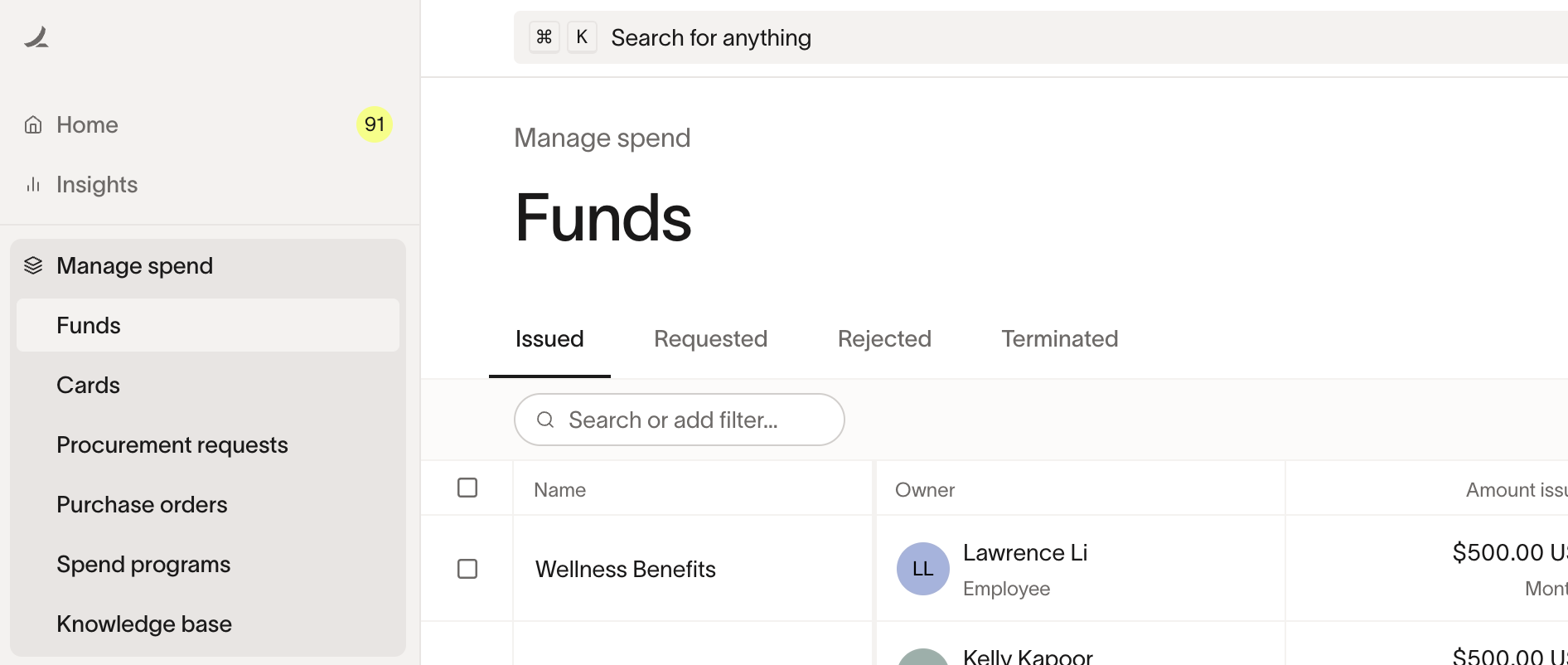
The platform covers six core workflows. Corporate cards issue unlimited virtual and physical cards with built-in spend controls, merchant restrictions, and 1.5 percent uncapped cashback. Expense management handles receipt capture (via SMS, email, Slack, or mobile app), automatic categorization, and policy enforcement. Bill pay processes invoices through ACH, wire, or check with approval workflows. Procurement (on Plus and Enterprise) adds intake forms, purchase orders, three-way matching, and vendor onboarding. Travel integrates booking with policy controls and expense workflows. Accounting integrations sync to QuickBooks, Xero, Sage Intacct, NetSuite, and others.
The typical buyer is a US-based incorporated business with 10 to 500 employees that wants to consolidate corporate cards, expense reports, and AP into one system. SaaS companies, professional services firms, and growth-stage startups dominate the customer base. Ramp is less appropriate for sole proprietors (who do not qualify), companies with under $25,000 in US cash reserves, or businesses needing deep enterprise AP automation that competes with dedicated tools like Bill.com or Stampli.
Pricing
Ramp publishes a clearer pricing page than most competitors but the headline numbers do not capture the full picture. There are three tiers: Free, Plus, and Enterprise.
| Plan | Price | Best for |
|---|---|---|
| Ramp (Free) | $0/month | Smaller teams needing cards, basic expenses, bill pay, accounting sync |
| Ramp Plus | $15/user/month + platform fee | Procurement, global payments, advanced policy controls |
| Ramp Enterprise | Custom (typically negotiable) | Custom integrations, dedicated support, multi-entity, ERP depth |
The Free tier is genuinely free at the subscription level. Ramp earns interchange fees from merchant transactions on the corporate card and splits them with Visa, which is how the business model funds the free product. Free users get unlimited cards, basic spend controls, expense management, bill pay, accounting integrations with QuickBooks Online and Xero, and 1.5 percent uncapped cashback.
Ramp Plus at $15 per user per month adds procurement workflows (purchase orders, vendor onboarding, three-way matching), global payment capabilities (multi-currency support including CAD, GBP, EUR), advanced approval routing, custom travel policies, and auto-lock cards for policy enforcement. Plus also carries an undisclosed platform fee based on team size that does not appear on the public pricing page. Annual billing typically gets a 20 percent discount.
Enterprise pricing is custom and based on Vendr transaction data, customers commonly negotiate 20 to 44 percent discounts off initial quotes for multi-year commitments. Enterprise adds NetSuite and Sage Intacct integrations, multi-entity support, dedicated implementation, custom approval workflows, and SOC 2 reporting tools.
Two non-negotiable eligibility requirements matter before applying. Ramp requires a minimum $25,000 balance in a US business bank account at application (reduced from $75,000 in early 2024). And Ramp only serves corporations, LLCs, and limited partnerships; sole proprietorships do not qualify, no exceptions. If you do not meet both, you cannot use Ramp regardless of plan.
Transaction fees apply only to bill payments: $10 for same-day ACH, $15 for domestic wire, and $20 for international wire (SWIFT USD). Standard ACH bill payments are free.
Where Ramp Stands Out
The free tier is genuinely free
Most “free” finance products gate critical features behind paid tiers. Ramp’s Free tier includes unlimited cards, real expense management, bill pay, accounting integrations, vendor management, and 1.5 percent uncapped cashback. For a small to mid-sized business that fits the eligibility profile, Ramp can replace Brex (free tier limited), Expensify ($5 to $20 per user per month), and a basic AP tool with one product at zero subscription cost. The free tier alone is enough to outcompete paid alternatives on price for the majority of users.
AI-powered automation depth
Ramp’s automation is consistently rated near the top of the category. AI categorization codes transactions based on merchant and historical patterns, receipt matching is automatic for most cards via SMS or email forwarding, and Ramp identifies duplicate subscriptions, redundant SaaS contracts, and overspend patterns from aggregated customer data. Reviewers consistently highlight 1 to 2 days saved per week on month-end close compared to manual processes.
Strong integration with QuickBooks and Xero
The bi-directional sync with QuickBooks Online and Xero is a core differentiator at the small to mid-market level. Transactions, bills, payments, vendor records, and reimbursements flow in real time, which dramatically reduces manual reconciliation. NetSuite and Sage Intacct integrations exist but are gated to Plus and Enterprise tiers and have known sync depth limitations (typically daily batch updates rather than true real-time).
Treasury and yield on idle cash
Ramp Treasury offers 2 percent yield on a business checking account or 3.87 percent on an investment account, with no fees, minimum deposits, or transfer caps. Automated cash sweeps, target balances, and recurring transfers were added in August 2025. For finance teams sitting on operating cash that earns nothing in a traditional business checking account, the treasury feature alone can offset Plus subscription costs at modest balances.
Spend visibility and consolidation
The biggest practical win for finance teams is consolidation. Instead of running a corporate card platform plus an expense tool plus an AP tool plus a procurement tool plus a travel tool, Ramp puts all of it on one employee record with one approval workflow. This reduces system sprawl, improves data consistency, and shortens the time between a request and a payment.
Where Ramp Falls Short
Eligibility wall locks out a meaningful share of buyers
The $25,000 minimum US business bank balance and the corporate-entity-only requirement disqualify a real share of small businesses. Sole proprietors, single-member LLCs without separate banking, churches and unincorporated nonprofits, and very early-stage businesses that have not raised capital cannot use Ramp at all. Competitors like Expensify and Bill.com Divvy serve those segments without comparable restrictions.
Dynamic credit limits can fluctuate
Ramp underwrites credit limits dynamically based on cash balance, revenue, industry, and credit bureau data. Limits can shrink as cash position drops, and in extreme cases the card can be restricted entirely. For ecommerce companies with seasonal cash flow swings (large outflows building Q4 inventory before revenue catches up), this volatility is a known issue. If your cash flow is irregular, ask Ramp’s onboarding team to walk through how their underwriting handles a normal trough month before committing recurring expenses to the card.
AP automation is good but not deep
Bill pay handles standard ACH, wire, and check payments with approval workflows, and the AI invoice extraction is reasonable. But for finance teams with complex AP needs (high invoice volume, sophisticated multi-tier approvals, deep ERP-bound workflows, three-way PO matching across thousands of vendors), purpose-built AP platforms like Bill.com and Stampli are typically deeper. Reviewers also note that payments made outside Ramp do not always sync cleanly back to the ERP, which creates double-entry work for some clients.
Customer support has thinned
This is the most consistent recent complaint. Trustpilot reviews from late 2025 and early 2026 describe slow email response times, hard-to-reach humans, and bot-heavy initial interactions. The contrast between G2 (4.8 from 2,400+ reviews) and Trustpilot (3.5) is the clearest signal: vendor-solicited reviews capture the broad base of satisfied daily users, while Trustpilot disproportionately reflects buyers who hit a wall when they needed real human help. Card disputes are a documented weak spot, and complex multi-product issues escalate slowly.
International support is uneven
Ramp’s primary market is US-based businesses. Multi-currency support exists for CAD, GBP, and EUR on Plus, but international AP, non-Latin character support (e.g. Japanese PDFs), and country-specific banking formats are reported as weaker than Ramp’s US functionality. For US-headquartered businesses with significant international vendor or contractor spend, Ramp can handle it, but expect more manual handling than the US-domestic experience suggests.
How Ramp Compares
Ramp competes across corporate cards, expense management, AP automation, and procurement. The right comparison depends on which problem dominates your workflow.
| Provider | Starting price | Best for |
|---|---|---|
| Ramp | Free; Plus $15/user/month | Incorporated US businesses with stable cash flow consolidating spend |
| Brex | Free tier; Premium custom | Globally oriented VC-backed startups (acquisition pending) |
| Bill.com Divvy | Free with Bill.com integration | Companies tied to Bill.com AP workflows |
| Navan | Quote-based | Travel-heavy teams needing integrated booking |
| Expensify | $5 to $20/user/month | Expense-only buyers without cards or AP needs |
Ramp vs Brex. The two leading modern corporate card platforms. Both offer free tiers and earn through interchange. Brex historically served VC-backed startups with global multi-currency needs better. Ramp has gained traction with mid-market and accounting-integrated buyers. Capital One announced acquisition of Brex in January 2026 for $5.15 billion, expected to close mid-2026, which has introduced product and pricing uncertainty. Ramp is actively marketing against this uncertainty and many Brex customers are evaluating Ramp as a hedge.
Ramp vs Bill.com Divvy. Bill.com Divvy is free with a Bill.com subscription, has fixed credit limits (rather than dynamic), and integrates tightly with Bill.com‘s AP product. Choose Divvy if you already run Bill.com for AP, prioritize predictable credit limits, or cannot meet Ramp’s $25,000 minimum balance. Choose Ramp for AI automation depth, simpler interface, and broader product breadth.
Ramp vs Navan. Navan (formerly TripActions) leads on integrated travel booking and management. If T&E is your primary use case and your team books frequently, Navan’s travel product is more mature. Ramp’s travel tools have improved meaningfully but Navan still wins on travel-specific depth.
Ramp vs Expensify. Expensify is purely an expense management product with optional card. For teams that already have corporate cards from a bank and only need expense reporting, Expensify is cheaper and more focused. Ramp wins when you want cards plus expenses plus AP plus procurement on one platform at one price (or zero).
Who Should Use Ramp
Ramp is the right call for incorporated US businesses with 10 to 500 employees and stable cash flow that want to consolidate corporate cards, expense management, bill pay, and procurement on one platform. SaaS companies, professional services firms, agencies, and growth-stage startups are the sweet spot. The Free tier covers most teams under 50 employees with straightforward needs; Plus pays for itself quickly when you need procurement workflows or global payments.
It also fits accounting and bookkeeping firms managing client spend, where Ramp’s QuickBooks and Xero integrations and consolidated visibility across cards and AP can replace several point tools per client. Many accountants now position Ramp as a default recommendation for clients that meet the eligibility criteria.
Ramp is less suited for sole proprietors, single-member LLCs without dedicated business banking, and very early-stage businesses with under $25,000 in US cash. These buyers cannot qualify regardless of plan. Companies with highly seasonal or irregular cash flow (especially ecommerce with inventory cycles) should evaluate carefully because dynamic credit limits can constrain purchasing exactly when cash is tightest. And finance teams whose primary need is enterprise-grade AP automation across thousands of invoices typically get more depth from Bill.com or Stampli.
Final Verdict
Ramp is the strongest default in spend management for incorporated US businesses that meet the eligibility bar. The free tier is genuinely free, the AI automation saves real time at month-end, the QuickBooks and Xero integrations are best-in-class for the small to mid-market, and the consolidation of cards, expenses, AP, procurement, and treasury on one platform reduces system sprawl in ways most finance teams notice within the first month.
The cautions are specific and worth surfacing during evaluation. Confirm you meet the $25,000 minimum balance and corporate entity requirement before investing setup time. If your cash flow is irregular, model a trough month against Ramp’s dynamic credit limits before committing recurring spend. If your AP needs are deep or enterprise-scale, pilot Bill.com or Stampli alongside Ramp. And expect customer support to be thinner than the marketing suggests, especially for complex disputes.
This article is informational and not legal, tax, or financial advice. Eligibility requirements, fees, and credit terms can change. Consult a qualified accountant or financial advisor before making finance platform decisions for your business.
Frequently Asked Questions
Is Ramp really free?
Yes, the Free tier has no subscription cost. Ramp earns through interchange fees on corporate card transactions and splits revenue with Visa. Free users get unlimited cards, expense management, bill pay, accounting integrations, vendor management, and 1.5 percent uncapped cashback.
What is the minimum balance to qualify for Ramp?
$25,000 in a US business bank account at application (reduced from $75,000 in early 2024). This is an underwriting requirement at sign-up, not an ongoing balance covenant. Sole proprietors do not qualify regardless of balance.
How does Ramp Plus pricing actually work?
Plus costs $15 per user per month plus an undisclosed platform fee that varies by team size. Annual billing typically saves 20 percent. The exact platform fee is not published and requires a sales conversation.
What does Ramp Enterprise add?
Custom integrations (NetSuite, Sage Intacct, custom ERPs), multi-entity support, dedicated implementation, custom approval workflows, SOC 2 reporting, and locally denominated cards for global teams. Pricing is negotiable; Vendr data suggests 20 to 44 percent discounts off initial quotes are achievable for multi-year commitments.
How does Ramp credit underwriting work?
Ramp sets dynamic credit limits based on cash balance, revenue, industry, and credit bureau data. Limits can change as your financial profile changes, including shrinking when cash position drops. For irregular cash flow businesses, this volatility is worth modeling before committing recurring expenses.
Does Ramp charge transaction fees?
The card itself has no annual fee, no late fees (it is a charge card with balances due in full), and no card replacement fees. Bill pay transactions cost $10 for same-day ACH, $15 for domestic wire, and $20 for international SWIFT USD wire. Standard ACH bill payments are free.
How does Ramp compare to Brex after the Capital One acquisition?
Capital One announced the Brex acquisition in January 2026 for $5.15 billion, expected to close mid-2026. Product direction, pricing, and startup focus are uncertain until the deal closes. Many Brex customers are evaluating Ramp as a hedge. Ramp’s positioning has not changed and the platform continues normal operations.
Can Ramp replace Bill.com for AP?
For small to mid-market AP volumes with straightforward approval workflows, yes. For high-volume enterprise AP with complex multi-tier approvals, deep ERP-bound workflows, or thousands of vendors needing three-way PO matching, Bill.com or Stampli are typically deeper.
Does Ramp work for nonprofits and churches?
Only if the nonprofit is incorporated as a 501(c)(3) corporation or LLC and meets the $25,000 balance requirement. Unincorporated ministries, church plants, and small nonprofits without dedicated business banking cannot qualify.
What is Ramp Treasury?
A business banking and investment product that earns 2 percent yield on a business checking account or 3.87 percent on an investment account, with no fees, minimum deposits, or transfer caps. Automated cash sweeps and recurring transfers were added in August 2025.
Related Reads
- Bill.com review: AP automation and payments for growing businesses
- Expensify review: focused expense management for teams
- QuickBooks review: small business accounting standard
- Xero review: cloud accounting for service businesses
- Sage review: traditional accounting and ERP options
- FreshBooks review: invoicing and accounting for freelancers
- Wave review: free accounting for small teams
Last updated on May 10, 2026